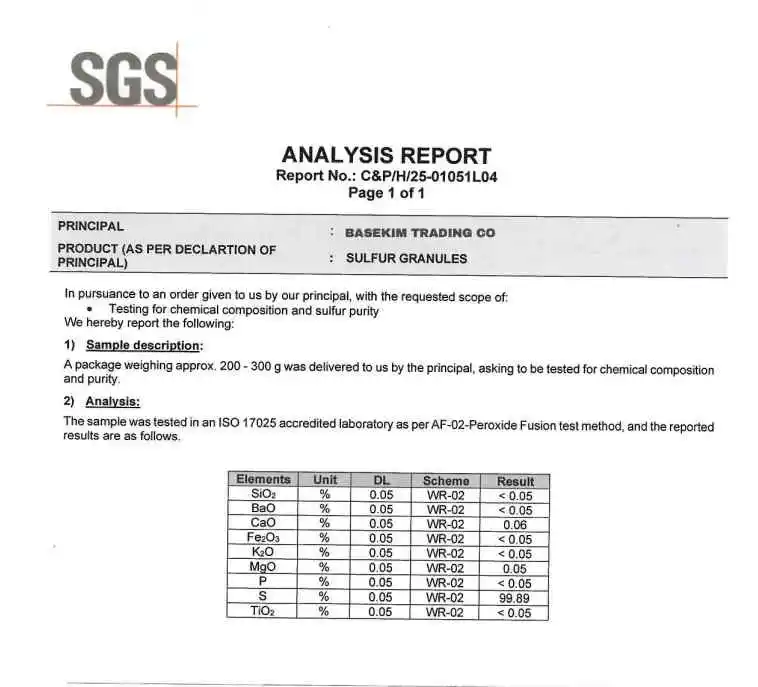
Granular Sulfur 99.5% and 99.8% are among the most widely traded sulfur grades in the global market, used extensively in fertilizer production, sulfuric acid plants, refineries, and various industrial processes. Thanks to their high purity, uniform granule size, and safe handling characteristics, sulfur products are preferred by international buyers looking for stable quality and export-ready materials.
This guide explains the key properties, applications, differences between 99.5% and 99.8% grades, packaging options, and essential information buyers consider before sourcing granular sulfur for industrial or agricultural use.
What Is Granular Sulfur?
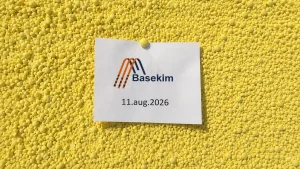
Granular sulfur is produced by solidifying molten sulfur into rounded, free-flowing granules. These granules typically range between 2–6 mm in size and have a bright yellow appearance. Compared to lump or powder sulfur, the granular form offers better handling, reduced dust generation, and more consistent performance during storage, transport, and processing.
Because of its stable physical form and high purity, granular sulfur is widely supplied for export and large-scale industrial consumption.
Difference Between Granular Sulfur 99.5% and 99.8%
Both grades are widely used in global markets, but the choice depends on purity requirements and final application.
Granular Sulfur 99.5%
Standard industrial-grade sulfur
Suitable for most fertilizer and chemical applications
Cost-effective and widely available
Commonly used in phosphate fertilizer production
Reliable for large-volume exports
Granular Sulfur 99.8%
Higher purity with lower impurity levels
Preferred for sensitive chemical and refinery processes
Ensures cleaner reactions and better process efficiency
Often required by buyers with strict quality standards
In practice:
99.5% sulfur is ideal for general industrial and agricultural use, while 99.8% sulfur is selected when higher purity directly affects product performance or downstream reactions.

Key Specifications of Granular Sulfur
Purity: 99.5% or 99.8%
Form: Granular / spherical
Color: Bright yellow
Particle size: Typically 2–6 mm
Moisture: Very low
Solubility: Insoluble in water
Odor: Odorless
HS Code: 250300
Transport classification: Non-Dangerous Goods (Non-DG)
Applications of Granular Sulfur
1. Fertilizer Industry
Granular sulfur is widely used in the production of phosphate fertilizers and sulfur enriched fertilizers. Sulfur plays a vital role in plant nutrition, supporting protein synthesis and enzyme activity. Its gradual oxidation in soil provides long-term sulfur availability, improving crop yield and soil health.
2. Sulfuric Acid Production
A major portion of global sulfur consumption goes into sulfuric acid manufacturing. Both 99.5% and 99.8% granular sulfur are suitable feedstocks, offering stable composition and efficient conversion. High-purity sulfur minimizes impurities and improves acid quality.
3. Petroleum Refining
Refineries use high-purity sulfur, especially 99.8%, in controlled processes where impurity levels must remain low. The granular form ensures safe storage, controlled feeding, and easy internal handling.
4. Rubber and Plastics Industry
Sulfur is essential for rubber vulcanization, improving elasticity, durability, and resistance. sulfur provides uniform dispersion during mixing, helping manufacturers achieve consistent product quality.
5. Other Industrial Uses
Granular sulfur is also used in:
Chemical manufacturing
Detergents and cleaning agents
Explosives
Paper and pulp industry
Water treatment processes
High-purity grades are preferred when chemical reactions are sensitive to contaminants.
Packaging and Export Options
Granular sulfur is commonly supplied in export-friendly packaging designed for safe handling and long-distance transport:
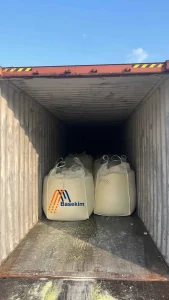
1 MT jumbo bags with inner liner (most common)
25 kg or 50 kg bags (upon request)
Bulk shipments in containers or vessels
All packaging options are suitable for international trade and comply with standard export requirements.
Storage and Handling Guidelines
Although granular sulfur is classified as Non-Dangerous Goods (Non-DG) for land and sea transport, proper handling is essential:
Store in dry, well-ventilated areas
Keep away from strong oxidizing agents
Avoid moisture exposure
Minimize dust during handling
Use basic PPE such as gloves, masks, and goggles
Proper storage ensures product stability and workplace safety.
Why Buyers Choose Granular Sulfur for Export
High and consistent purity
Easy handling and loading
Reduced dust compared to powder
Stable during long-distance shipping
Suitable for bulk and container transport
Accepted worldwide for industrial use
These advantages make sulfur one of the most reliable sulfur forms for global supply chains.
Frequently Asked Questions (FAQ)
Is granular sulfur better than lump sulfur?
Sulfur offers better handling, lower dust, and more uniform particle size, making it easier to transport and process compared to lump sulfur.
What is the difference between 99.5% and 99.8% sulfur?
99.8% sulfur has fewer impurities and is preferred for sensitive chemical or refinery applications, while 99.5% is suitable for most industrial and fertilizer uses.
Can sulfur be shipped in containers?
Yes. sulfur is commonly shipped in containers using jumbo bags or smaller bags and is classified as Non-DG.
What packaging is used for export?
Standard export packaging includes 1 MT jumbo bags with liners, as well as 25–50 kg bags upon request.
Is sulfur hazardous?
No. It is classified as non-dangerous for transport, but safe handling practices should always be followed.