Prilled Urea (46% Nitrogen): Complete Guide for Buyers & Importers
Prilled Urea (Urea 46%) – Overview
Prilled urea is one of the world’s most widely used nitrogen fertilizers, valued for its 46% nitrogen content, fast dissolution, and easy handling. It appears as small, near-spherical prills (typically 1–3 mm), making it suitable for both agricultural applications and selected industrial uses.
Thanks to its high solubility and uniform particle size, prilled urea is widely chosen where quick nutrient availability and smooth application are required. In this guide, you will learn how prilled urea is produced, its technical specifications, application methods, storage practices, and how it compares with granular urea.
What Is Prilled Urea?
Prilled urea is produced by solidifying molten urea into fine spherical particles through a controlled cooling process. This manufacturing method gives prilled urea its characteristic high solubility, good flowability, and uniform appearance.
Farmers, distributors, and industrial buyers often prefer prilled urea when fast dissolution, ease of mixing, and consistent particle size are important performance factors.
Key Characteristics
Nitrogen (N): 46%
Particle size: typically 1–3 mm
Solubility: very high, dissolves rapidly in water
Mechanical strength: lower than granular urea
Dust potential: higher if roughly handled
How Prilled Urea Is Manufactured
Prilled urea is produced in a vertical structure known as a prilling tower, using the following steps:
Melting: Solid urea is heated until it becomes molten.
Prilling: The molten urea is sprayed through nozzles at the top of the tower.
Cooling: Cool air flows upward, solidifying the droplets into spherical prills.
Screening: Particles are screened to achieve uniform size distribution.
Finishing: Anti-caking agents may be applied before packaging.
This controlled process ensures uniform quality, high solubility, and reliable performance in agricultural use.
Key Technical Specifications
The quality of urea is defined by several critical parameters. Buyers should always confirm these values in contracts and certificates of analysis.
Typical parameters include:
Nitrogen content
Moisture level
Biuret percentage
Particle size distribution
Bulk density
Prilled Urea vs. Granular Urea
Although both products contain 46% nitrogen, their physical behavior and applications differ significantly.
Prilled Urea
Smaller particle size (1–3 mm)
Faster dissolution
Higher dust formation
Less resistant to mechanical stress
Ideal for quick soil absorption and liquid blending
Granular Urea
Larger, harder granules (2–4 mm)
Better resistance during handling and transport
Lower dust generation
Preferred for bulk blending and long-distance export
Summary:
Choose prilled urea when fast solubility and fine particle size are required.
Choose granular urea for heavy handling, blending plants, and long export chains.
Best Practices for Applying Prilled Urea
To maximize nitrogen efficiency and reduce losses, follow these guidelines:
Timing: Apply when crops can immediately absorb nitrogen.
Weather: Avoid hot, windy conditions during application.
Incorporation: Mix into soil or irrigate shortly after spreading.
Moisture: Light rainfall or irrigation improves nutrient uptake.
Leaf safety: Avoid leaving prills on wet leaves under strong sunlight.
Application rate: Follow soil analysis and local agronomic advice.
Inhibitors: Consider urease or nitrification inhibitors where suitable.
Storage & Handling Recommendations
Improper storage can cause caking and quality loss. To preserve product integrity:
Store in dry, moisture-free warehouses
Keep temperature stable and moderate
Ensure good ventilation
Use pallets to keep bags off the floor
Avoid excessive stacking height
Apply FIFO (first-in, first-out) inventory control
Handle gently to reduce dust and breakage
Packaging & Logistics
Common export packaging options include:
50 kg PP bags
500–1,200 kg jumbo (FIBC) bags
A standard 20-foot container typically loads ~25 MT, depending on packaging and regulations.
Common shipping documents include:
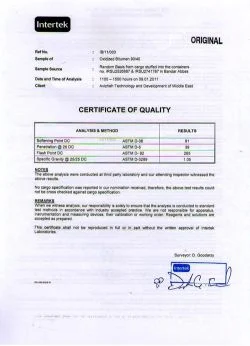
Certificate of Analysis (COA)
MSDS / SDS
Packing List
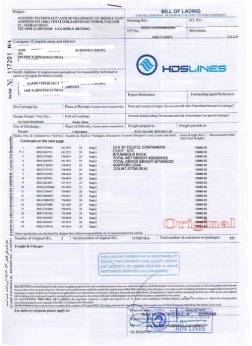
Bill of Lading (B/L)
Industrial Uses Beyond Agriculture
In addition to farming,urea is widely used as a raw material in:
Urea-formaldehyde resins (wood panels & adhesives)
Melamine production
Chemical synthesis processes
Certain de-icing formulations (subject to regulation)
Important: Fertilizer-grade urea must not be used for DEF / AdBlue.
Automotive SCR systems require ISO 22241–certified urea only.
Trade & Regulatory Notes
HS Code (solid urea): 3102.10
Fertilizer-grade quality is defined by nitrogen %, moisture, biuret, and particle size
Industrial or DEF-grade urea must meet stricter ISO standards
Frequently Asked Questions (FAQ)
1. Is prilled urea the same as granular urea?
No. Both contain 46% nitrogen, but urea has smaller, weaker particles, while granular urea is stronger and better suited for long-distance handling.
2. What biuret level is acceptable?
Typically ≤ 1.0% for fertilizer use. Sensitive crops may require even lower levels.
3. How can nitrogen loss be minimized?
Apply before irrigation or rainfall, incorporate into soil, and consider inhibitors in warm conditions.
4. How can caking during storage be prevented?
Control humidity, avoid temperature fluctuations, use anti-caking agents, and rotate stock properly.
5. Can prilled urea be used for DEF / AdBlue?
No. Only urea produced under ISO 22241 standards is suitable for DEF.
Table of Contents
Technical Specifications
| Parameter | Typical Value / Range |
|---|---|
| Total Nitrogen | 46.0% min |
| Moisture | ≤ 0.5% |
| Biuret | ≤ 1.0% |
| Particle Size Distribution | ≥ 90% between 1–3 mm |
| Fines (<1 mm) | ≤ 1–2% |
| Anti-caking Agent | As agreed (treated/untreated) |
| Oil/Conditioner | Trace (if used) |
References and certificates