Sulphonated Asphalt for Drilling Fluids_Shale Stabilization & Fluid Loss Control
What Is Sulphonated Asphalt?
Sulphonated asphalt is a chemically modified asphaltic hydrocarbon produced through a controlled sulphonation process in a closed system. This treatment makes the material partially water-dispersible, allowing it to perform effectively in water-based drilling fluids.
Primarily used in oil and gas drilling operations, sulphonated asphalt functions as a shale stabilizer and fluid loss control additive. It helps maintain wellbore integrity by reducing shale swelling, sealing micro-fractures, and improving overall drilling fluid performance under demanding downhole conditions.
Role of Sulphonated Asphalt in Drilling Fluids
In drilling operations, drilling mud plays a critical role in pressure control, cuttings transport, lubrication, and wellbore stability. Sulphonated asphalt enhances these functions through its strong emulsifying and wetting properties.
By stabilizing the drilling fluid system, it minimizes water separation, reduces fluid invasion into formations, and significantly lowers the risk of formation damage. Its performance remains reliable under high-temperature and high-pressure (HTHP) environments, making it a preferred additive for challenging drilling conditions.
Applications in Oil & Gas Drilling
Sulphonated asphalt is widely applied in both water-based and oil-based drilling mud systems, particularly in formations prone to shale instability. Its main applications include:
Shale inhibition and wellbore stabilization
Fluid loss control in HTHP drilling conditions
Reduction of torque and drag during drilling
Improvement of filter cake quality and fracture sealing
These characteristics contribute to smoother drilling operations, reduced equipment wear, and improved drilling efficiency.
Functional Benefits
Sulphonated asphalt provides multiple operational advantages in drilling fluids:
Lubricates drilling mud, reducing torque and drag
Seals micro-fractures in stressed sedimentary formations
Prevents bit balling and sticking by oil-wetting metal surfaces
Enhances thermal stability and reduces temperature-related fluid loss
Inhibits clay swelling and shale hydration
Improves filter cake integrity and wellbore sealing
Relation to Polymer Modified Bitumen (PMB)
While sulphonated asphalt is primarily designed for drilling fluid applications, its performance is rooted in controlled asphalt modification techniques. Similar to Polymer Modified Bitumen (PMB), sulphonated asphalt benefits from chemical modification that enhances stability, compatibility, and performance under extreme conditions.
In PMB-based systems, modified asphalt technologies are used to improve elasticity, durability, and resistance to stress. Sulphonated asphalt represents a specialized adaptation of asphalt modification, optimized not for paving, but for fluid systems where dispersion, thermal stability, and interaction with polymers and additives are essential.
This makes sulphonated asphalt conceptually aligned with PMB technologies, while remaining a distinct solution tailored for oilfield drilling environments.
Packaging Options
Sulphonated asphalt can be supplied in multiple industrial packaging formats to meet logistics and handling requirements:
25 kg multi-wall paper bags on pallets
1,000 kg jumbo bags
50 lbs bags
PP woven bags
HS Code, CAS & Regulatory Information
HS Code: 2714.90.90
CAS Number: 68201-32-1
EC Number: 269-212-0
Trade Names and Industry(toggle equivalence)
Sulphonated asphalt is marketed globally under different trade names, including products used by major oilfield service companies. These equivalents confirm its widespread acceptance and standardized performance across drilling applications.
Export Markets
Sulphonated asphalt is supplied to oil and gas projects across the Middle East, Europe, South Asia, and the Americas, supporting drilling operations in both onshore and offshore environments.
Table of Contents
Technical Specifications
| Property | Typical Value |
|---|---|
| Appearance | Black Powder |
| pH Value | 8 – 9 |
| Moisture Content | < 8% |
| Sodium Sulfonate Base | > 10% |
| Water Soluble Content | > 70% |
| Oil Soluble Content | > 25% |
| HTHP Fluid Loss | < 25 ml |
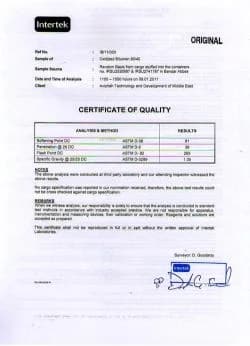
References and certificates