CRMB 60 Bitumen Manufacturer | Heavy Duty Rubber Binder
Crumb Rubber Modified Bitumen 60 (CRMB 60) is a high-performance rubber-modified asphalt binder designed for extreme service conditions, where pavements are exposed to very heavy traffic loads, high pavement temperatures, and continuous mechanical stress.
CRMB 60 is produced by blending penetration grade bitumen with recycled crumb rubber under controlled temperature and shear conditions. This process enhances the binder’s stiffness and deformation resistance, while maintaining sufficient elastic recovery to control cracking and fatigue.
Among CRMB grades, CRMB 60 represents the highest performance level, typically selected when lower grades or conventional bitumen no longer meet structural and durability requirements.
Engineering Purpose of CRMB 60
From a pavement engineering perspective, CRMB 60 is specified to:
Maximize resistance to rutting and shoving
Maintain structural stability at elevated service temperatures
Support long-life pavement designs under heavy axle loads
Reduce permanent deformation in high-stress pavement zones
CRMB 60 is not intended for general-purpose roads; it is chosen for critical pavement sections where performance reliability is a priority.
Typical Applications
CRMB 60 is commonly used in:
Heavy-duty highways and freight corridors
Port roads, container terminals, and logistics hubs
Industrial and mining access roads
High-load intersections, ramps, and climbing lanes
Pavement structures in hot and extreme climate regions
In these applications, CRMB 60 helps pavements retain shape and load-bearing capacity under severe operating conditions.
Handling, Storage, and Supply
CRMB 60 is handled following standard hot bitumen procedures.
Uniform heating is required to maintain homogeneity
Prolonged overheating should be avoided to protect rubber-modified structure
Storage tanks and containers must be clean and dry
CRMB 60 is supplied in bulk tanker trucks or steel drums, depending on project size and logistics requirements.
Comparison: CRMB 60 vs Other Binders
| Parameter | CRMB 50 | CRMB 55 | CRMB 60 | PMB |
|---|---|---|---|---|
| Relative Stiffness | Medium | Medium–High | High | High (engineered) |
| Rutting Resistance | Good | Very Good | Excellent | Excellent |
| Elastic Behavior | High | High | Moderate–High | Controlled |
| Suitability for Heavy Traffic | Moderate | High | Very High | Very High |
| Performance in Hot Climate | Good | Very Good | Excellent | Excellent |
| Cost Level | Lower | Medium | Medium–High | High |
| Typical Use | General heavy roads | High-stress roads | Extreme-duty pavements | Premium projects |
In simple terms:
CRMB 50 → flexibility-focused
CRMB 55 → balanced performance
CRMB 60 → maximum load and temperature resistance
PMB → precision-engineered, higher-cost solution
Frequently Asked Questions (FAQ)
When should CRMB 60 be selected instead of CRMB 55?
CRMB 60 is selected when pavement sections experience very heavy traffic and sustained high temperatures, where additional stiffness and rutting resistance are required.
Is CRMB 60 suitable for all road projects?
No. CRMB 60 is intended for high-stress and heavy-duty applications. For standard roads, lower CRMB grades or penetration grade bitumen are usually sufficient.
Can CRMB 60 replace PMB in pavement design?
In many heavy-load and hot-climate projects, CRMB 60 can serve as a cost-effective alternative to PMB, provided project specifications do not require polymer-specific performance criteria.
Table of Contents
Technical Specifications
| Property | CRMB 60 | Test Method |
|---|---|---|
| Penetration at 25°C (0.1 mm) | ≤ 50 | IS 15462:2004 |
| Softening Point (R&B), °C (Min) | 60 | IS 15462:2004 |
| Flash Point (COC), °C (Min) | 220 | IS 15462:2004 |
| Elastic Recovery at 15°C, % (Min) | 50 | IS 15462:2004 |
| Separation (Softening Point Difference), °C (Max) | 4 | IS 15462:2004 |
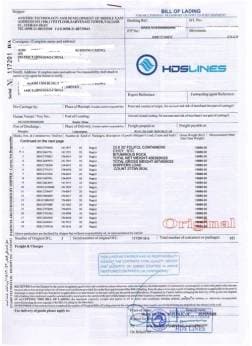
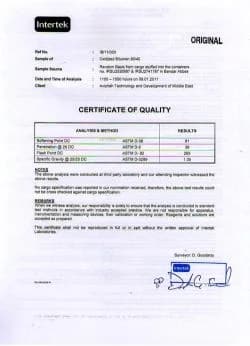
References and certificates